
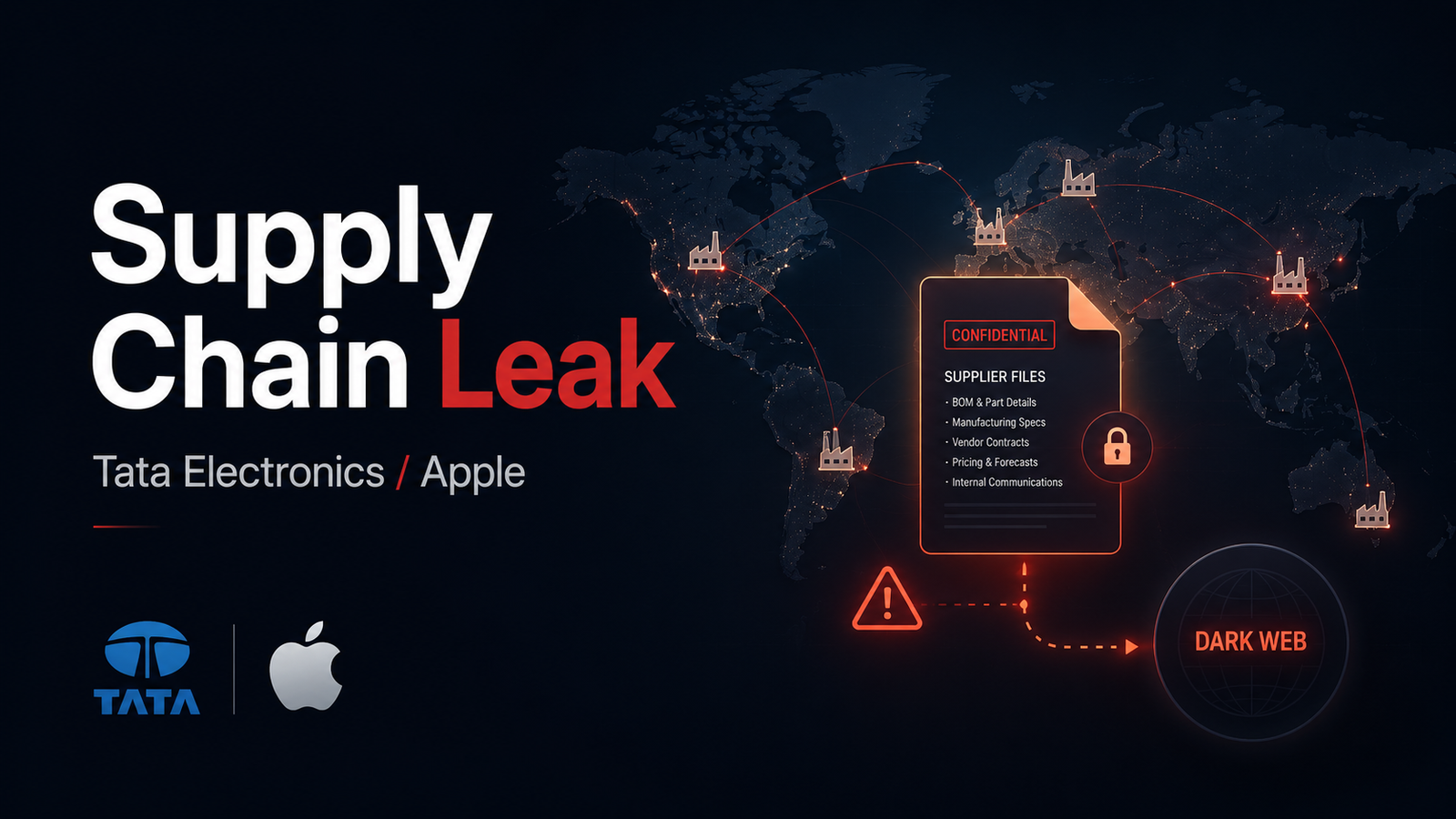
Tata Electronics and Apple Supply Chain Leak: Dark Web Exposure Puts Supplier Risk Back in Focus
Third-party risk is no longer a procurement checklist exercise. In global manufacturing and technology supply chains, suppliers often hold sensitive designs, production documents, remote access paths, employee records and customer-specific operational data. When that layer is exposed, the impact can extend well beyond the supplier’s own environment.
That is the core issue in the reported Tata Electronics incident. According to Reuters, Tata Electronics, one of Apple’s important suppliers in India, restricted access to sensitive internal systems, launched a forensic audit and notified the Indian government and affected customers after files allegedly linked to its clients appeared on the dark web.
The ransomware and extortion group World Leaks claimed to have published more than 200,000 files allegedly stolen from Tata Electronics. Researchers who reviewed the material told Reuters that the data included purported Apple and Tesla-related files, component designs, manufacturing specifications, emails, event logs and passport copies. Reuters clearly stated that it could not independently verify the authenticity of the leaked data.
That caveat matters. In breach reporting, especially where dark web leak sites are involved, claims should not be treated as proven facts until validated. However, the operational response from Tata — including forensic review, tighter access controls and customer notification — shows that the incident is being handled as a serious supply chain security matter.
The case is particularly relevant because Tata Electronics is part of Apple’s expanding manufacturing footprint in India. When a supplier connected to high-value technology production is linked to alleged exposure of confidential files, the concern is not only data privacy. It also touches intellectual property protection, product security, supplier assurance, manufacturing continuity and brand trust.
This is why the incident should not be read as a simple “data leak” story. It represents a wider shift in third-party risk. Sensitive documents, production workflows, supplier remote access and dark web exposure are increasingly connected. A supplier compromise can expose design information, reveal operational dependencies, support targeted phishing, or create pressure across a wider customer ecosystem.
For enterprise security leaders, the main lesson is clear: supplier security cannot be managed solely through annual questionnaires, spreadsheet-based risk scoring or contractual language. Those controls may be necessary, but they are not sufficient. Organisations need continuous visibility into supplier exposure, leaked documents, dark web mentions, exposed credentials, remote access paths and abnormal access to sensitive systems.
The technical risk areas are familiar but often under-monitored. Sensitive document leakage, weak remote access control, excessive supplier permissions, poor segmentation, unmanaged file repositories and limited audit coverage can all increase the impact of a supplier incident. In manufacturing environments, this is especially important because engineering, production and quality-control documents may be commercially sensitive even if they are not traditional personal data.
The business impact can also be significant. Intellectual property exposure may weaken competitive advantage. Customer trust can be damaged even before full forensic conclusions are available. Regulators and major clients may require evidence of containment, access review and security control improvements. For global supply chains, the reputational pressure can move faster than the technical investigation.
Security teams should review which suppliers hold sensitive documents, which users can access internal engineering or production systems remotely, and whether supplier-related access is logged and monitored centrally. Dark web monitoring should also be linked to third-party risk workflows rather than treated as a separate threat intelligence feed.
The Tata Electronics case is a reminder that modern supply chain security is not only about vendor due diligence. It is about continuous exposure management. If a supplier’s data, credentials or confidential documents appear outside the trusted environment, the organisation needs to know quickly, validate the risk and respond before the exposure becomes a business crisis.