
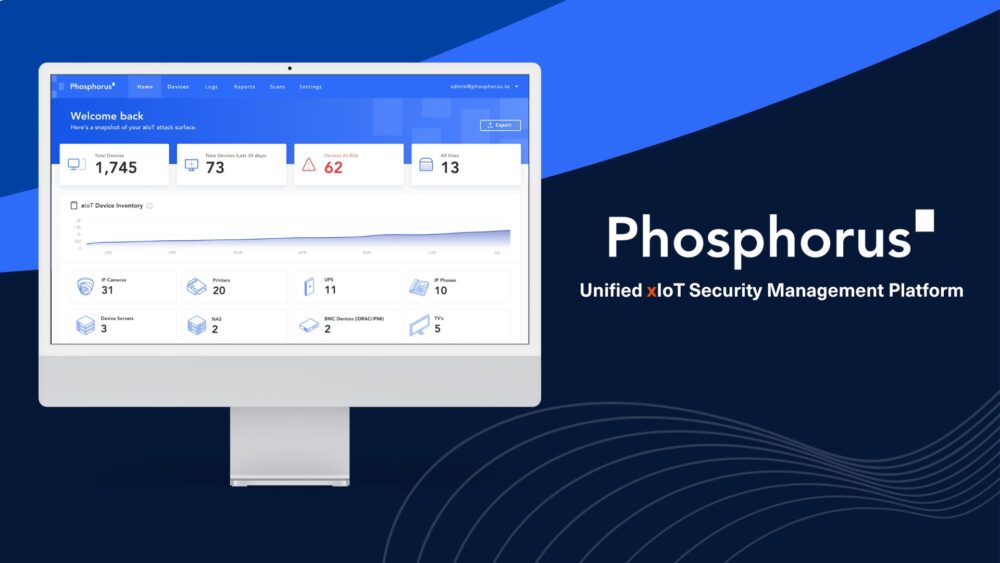
What is Phosphorus? A Modern Approach to xIoT Security, Visibility, and Risk Reduction
As enterprise infrastructures continue to evolve, the cybersecurity attack surface is expanding far beyond traditional IT assets. Today, organizations operate thousands of connected devices including IP cameras, printers, building automation systems, medical devices, industrial controllers, POS systems, and many other internet-connected technologies. These devices — often categorized under the broader concept of xIoT (Extended Internet of Things) — represent a rapidly growing and frequently unmanaged security domain.
Phosphorus is a cybersecurity platform designed specifically to address this challenge. It provides organizations with the ability to discover, assess, harden, monitor, and remediate risks across IoT, OT, IoMT, and IIoT environments. Rather than focusing solely on asset visibility, Phosphorus introduces a comprehensive lifecycle approach to xIoT security, combining device discovery, vulnerability analysis, configuration management, and automated remediation capabilities within a unified platform.
This article provides a detailed overview of Phosphorus, including its architecture, deployment models, technical capabilities, and the operational value it delivers to enterprise security teams.
The Security Challenges Phosphorus Addresses
One of the most significant cybersecurity gaps in modern organizations lies within unmanaged or poorly governed connected devices. Traditional security tools are primarily designed for servers, endpoints, and network infrastructure, leaving large portions of the xIoT ecosystem outside of effective monitoring and control.
Phosphorus addresses several key security challenges associated with these environments:
• Lack of visibility into connected devices across the network
• Devices operating with default or weak credentials
• Outdated or vulnerable firmware versions
• Expired or self-signed certificates used in device communications
• End-of-life or unsupported devices still operating within critical networks
• Misconfigured services such as Telnet, FTP, or insecure management protocols
These issues frequently create silent entry points for attackers. Because many xIoT devices cannot run traditional security agents, they often remain outside the scope of endpoint security platforms. Phosphorus is designed to close this gap by delivering deep visibility and direct remediation capabilities tailored specifically for connected device environments.
Key Technical Capabilities of the Phosphorus Platform
At the core of the Phosphorus platform lies a set of technical capabilities designed to manage the entire lifecycle of connected device security.
Intelligent Device Discovery
Phosphorus utilizes an intelligent active discovery approach that communicates directly with devices using their native protocols. This allows the platform to identify devices with high accuracy while maintaining minimal operational impact on the network.
Unlike passive monitoring solutions that rely solely on network traffic observation, Phosphorus actively queries devices to collect detailed metadata such as:
• Manufacturer and model information
• Firmware versions
• Device type classification
• Open services and protocols
• Authentication configurations
The platform supports discovery across a broad ecosystem of manufacturers and device types, allowing organizations to build a high-fidelity asset inventory of their xIoT environment.
Risk Assessment and Security Posture Analysis
Once devices are discovered, Phosphorus performs comprehensive risk analysis across multiple dimensions.
The platform evaluates device security posture based on:
• Firmware vulnerabilities
• Credential security status
• Device lifecycle status (EOL/EOS)
• Certificate configuration
• Compliance policy alignment
Phosphorus also incorporates vulnerability intelligence and risk prioritization frameworks to help security teams focus on the most critical remediation tasks.
Additionally, the platform supports reporting aligned with widely recognized compliance frameworks including:
• NIST 800-53
• NIST 800-82
• IEC 62443
• NERC CIP
• HIPAA
• NIS2
• NDAA Section 889
This capability allows organizations to integrate xIoT security into broader governance, risk, and compliance programs.
Automated Hardening and Remediation
One of the defining characteristics of Phosphorus is its ability to move beyond detection and enable direct remediation of device risks.
The platform provides automated mechanisms to address security issues such as:
• Default credential removal and password rotation
• Firmware updates and lifecycle management
• Certificate renewal and management
• Disabling insecure services such as Telnet or FTP
• Configuration hardening across device fleets
This remediation capability significantly reduces the manual effort typically required to secure large fleets of connected devices and allows organizations to operationalize their security policies at scale.
Continuous Monitoring and Operational Control
Security posture is not static. Devices may change configuration, fall out of compliance, or become unreachable due to operational changes.
Phosphorus addresses this challenge through continuous monitoring and change detection. The platform can alert security teams when events such as the following occur:
• Device configuration changes
• Password modifications outside approved workflows
• Firmware upgrades or downgrades
• Device resets or connectivity loss
• Certificate modifications
In addition, centralized log collection from xIoT devices enables enhanced forensic analysis, anomaly detection, and incident response capabilities.
Deployment Models and Architectural Approach
Phosphorus is designed to be flexible in how it is deployed across enterprise environments.
The platform follows a software-based and agentless architecture, which is particularly important in environments where devices cannot support security agents.
Organizations can deploy Phosphorus through several models:
• On-premise deployment via a virtual appliance within the enterprise network
• Cloud-based deployment for centralized management across distributed environments
• Hybrid architectures that combine both approaches
Because the platform does not rely on endpoint agents, it can operate effectively across sensitive environments such as healthcare networks, industrial control systems, and critical infrastructure where software installation on devices is not feasible.
Integration with Existing Security Ecosystems
Phosphorus is designed to complement and extend existing enterprise security tools rather than replace them.
The platform integrates with several major security and operational technologies, including:
• SIEM platforms
• SOAR automation systems
• Privileged Access Management (PAM) solutions
• Asset management platforms
• Security analytics tools
Examples of integrations include solutions such as Microsoft Sentinel, ServiceNow, CyberArk, and Axonius, enabling organizations to correlate xIoT security insights with their broader security operations workflows.
These integrations allow Phosphorus to function as a specialized visibility and control layer for connected devices within the overall security architecture.
Operational Benefits for Enterprise Security Teams
For enterprise security teams, the value of Phosphorus lies in its ability to transform how connected devices are managed and secured.
Key operational advantages include:
Comprehensive Device Visibility
Security teams gain a complete inventory of connected devices across their infrastructure, eliminating blind spots that attackers frequently exploit.
Reduced Attack Surface
Automated credential management, firmware patching, and configuration hardening significantly reduce exploitable vulnerabilities within device fleets.
Improved Security Governance
By aligning with established compliance frameworks, Phosphorus enables organizations to incorporate xIoT security into broader risk management and regulatory reporting processes.
Operational Efficiency
Large device fleets can be secured and maintained without requiring manual device-by-device intervention, dramatically reducing operational overhead.
Real-World Use Cases
Phosphorus is used across multiple industries where connected devices play a critical operational role.
Healthcare
Hospitals and healthcare networks operate large numbers of IoMT (Internet of Medical Things) devices. Phosphorus enables centralized visibility, credential management, and firmware lifecycle control across medical equipment environments.
Manufacturing and Industrial Environments
In industrial environments, Phosphorus provides safe discovery and hardening capabilities for OT and ICS systems while minimizing operational disruption.
Retail and Hospitality
Retail chains and hospitality organizations often operate distributed networks of POS systems, cameras, kiosks, and smart building devices. Phosphorus enables centralized management of these distributed device environments.
Financial Services and Data Centers
Financial institutions and data centers benefit from enhanced visibility into infrastructure devices and improved governance over device security policies.
Conclusion
As organizations continue to adopt connected technologies, the attack surface associated with IoT, OT, IoMT, and IIoT environments continues to expand. Traditional cybersecurity tools are not designed to manage the unique risks associated with these devices.
Phosphorus addresses this challenge by providing a comprehensive platform for xIoT discovery, risk assessment, remediation, and continuous monitoring. Its agentless architecture, automated remediation capabilities, and integration with enterprise security ecosystems enable organizations to move beyond basic visibility and toward operational control of their connected device environments.
For security leaders and technical teams alike, Phosphorus represents a practical and scalable approach to managing one of the fastest-growing segments of the modern cybersecurity attack surface.