
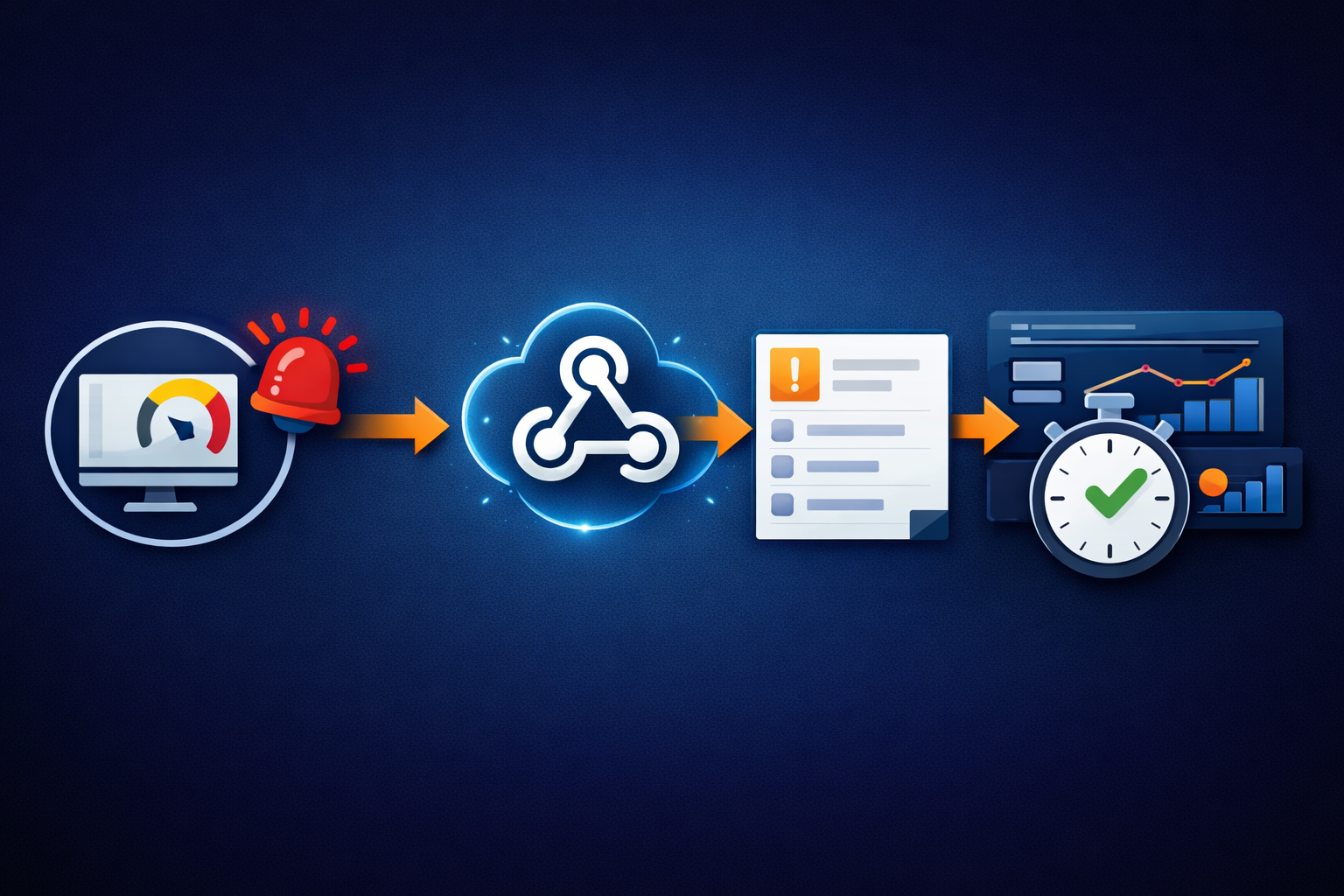
From Monitoring to Action: Why Alerts Must Trigger Accountability
Modern IT operations teams are drowning in alerts.
Your monitoring tool detects everything — CPU spikes, service outages, disk thresholds, unusual traffic patterns. But detection alone doesn’t solve incidents.
The real problem begins after the alert.
Manual ticket creation.
Internal escalation messages.
Unclear ownership.
SLA pressure building in the background.
This gap between detection and action is where operational chaos lives.
Monitoring Without Workflow Is Just Noise
Tools like PRTG Network Monitor provide deep visibility across infrastructure, applications, and network layers. Every sensor becomes a signal.
But a signal without automation requires human intervention.
And human intervention introduces delay.
In high-availability environments, even minutes matter.
Turning Alerts Into Automated Incidents
By integrating monitoring with an incident management workflow platform like TaskCall, alerts evolve into structured, trackable actions.
When an alert is triggered:
-
A ticket is created automatically
-
The right team is assigned instantly
-
SLA timing starts without delay
-
The incident lifecycle becomes measurable
This shift changes the role of monitoring from passive detection to active orchestration.
Why This Matters Now
Operational resilience today isn’t about having more alerts.
It’s about reducing friction between detection and response.
Organizations that automate this bridge:
-
Reduce mean time to respond (MTTR)
-
Eliminate manual ticket bottlenecks
-
Improve SLA compliance
-
Lower alert fatigue
-
Gain full incident traceability
Monitoring should not just inform.
It should initiate.
When alerts trigger accountability, operations move from reactive firefighting to controlled execution.